Source High Heat Resistant Welding Gloves for Welding, Gardening, Fire
Compare 18 listings of high heat resistant welding gloves featuring cowhide and nylon materials with heat insulation and anti-scratch properties. Buyers can evaluate options for welding, gardening, and fire protection applications with varying thickness and lining.
Key considerations
Products List



Comprehensive Sourcing Guide
Strategic Sourcing Guide for High Heat Resistant Welding Gloves
Understanding Technical Specifications and Material Composition
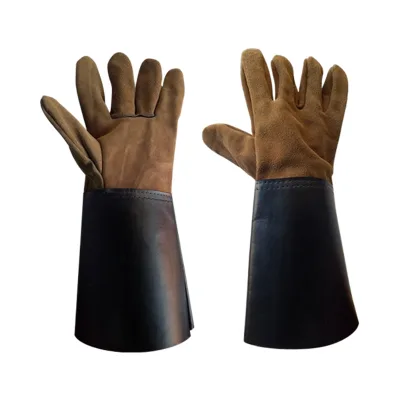
When sourcing high heat resistant welding gloves, the primary objective is to identify products that offer a balance of thermal protection, dexterity, and durability. The market presents a diverse array of specifications, and buyers must carefully distinguish between general heat resistance and specific welding-grade performance. Based on current market observations, effective welding gloves often feature a "Thickened" construction to ensure adequate insulation against radiant heat and occasional contact with hot surfaces. The material composition is a critical determinant of performance; high-quality options frequently utilize a combination of Cowhide and Nylon. Cowhide provides the necessary abrasion resistance and structural integrity required for heavy-duty welding tasks, while Nylon may be integrated to enhance flexibility or manage heat dissipation.
The grade of the leather is another vital technical parameter. Supply data indicates a range of grades including A, Ab, and Bc, with some listings specifying "Genuine Leather" as the outer material. Buyers should understand that leather grade directly correlates with the glove's lifespan and resistance to heat degradation. Higher grades typically offer superior fiber density, which translates to better protection against sparks and molten metal spatter. Furthermore, the internal construction plays a significant role in thermal management. Many high-performance models feature a "Full Lining" system, which not only adds a layer of insulation but also improves comfort during extended wear. The weight of these gloves is another observable metric, with typical ranges falling between 280g and 330g per pair. This weight range suggests a substantial build designed to withstand harsh environments, though it may impact fine motor skills compared to lighter, flimsy alternatives.
Design Features and Functional Attributes
The physical design of welding gloves dictates their suitability for specific welding processes and user comfort. A key design element is the cuff tightness. For welding applications, a "Loose" cuff is often observed, which facilitates easy donning and doffing while allowing for the accommodation of bulky sleeves or other personal protective equipment (PPE) underneath. However, the specific application must be considered; while loose cuffs offer versatility, they must not be so wide that they compromise the seal against falling debris. The palm style is equally important, with "Full Palm" coverage being a standard feature in high-heat gloves. This design ensures that the entire hand surface is protected from direct heat exposure and mechanical wear, which is essential for tasks involving prolonged contact with hot materials.
Additional design features significantly enhance the utility of these gloves. The presence of a "Welt" indicates a reinforced seam construction, which is crucial for preventing heat from penetrating through stitch lines. Similarly, the thumb design can vary; "Wing" thumbs are observed in several models, offering enhanced protection and flexibility for gripping awkward shapes or tools. While some general-purpose gloves may feature a "Reinforced Grip," welding-specific models often prioritize heat resistance over grip texture, relying on the natural properties of the leather and lining. It is also important to note that while some products are marketed as "Disposable," the high-heat welding gloves in this category are predominantly "Non-Disposable." This distinction is vital for cost planning, as non-disposable gloves represent a longer-term investment with a higher initial cost but a lower total cost of ownership over time due to their durability.
Compliance, Certification, and Safety Standards
Navigating the regulatory landscape is a fundamental aspect of sourcing industrial PPE. While specific test results and certification statuses vary by manufacturer, buyers must verify that products meet recognized safety standards. The supply data references several potential standards, including EN 407, EN388, EN12477, and ASTM F1060. EN 407 is particularly relevant for gloves protecting against thermal risks, covering aspects such as contact heat, radiant heat, and short-term immersion in flame. EN388 addresses mechanical risks like abrasion, cut, tear, and puncture resistance, which are essential for handling rough welding materials.
Buyers should not assume that every listed product automatically satisfies these standards without verification. The presence of a "CE" certificate in some product listings indicates that the manufacturer claims compliance with European Union safety directives, but this must be validated against the specific product batch and model number. When evaluating a supplier, request the specific test reports corresponding to the claimed standards. For instance, if a glove is advertised as "Fire Proof" or "Anti-Heat," the supplier should provide data demonstrating the temperature limits and duration of exposure the glove can withstand. It is also prudent to check for local regulatory requirements in the destination market, as standards like ASTM F1060 are specific to the United States and may not be recognized in other regions. The absence of a specific certification in a product listing does not necessarily indicate non-compliance, but it requires the buyer to conduct a more rigorous due diligence process to ensure the product meets the necessary safety thresholds for the intended application.
Cost Drivers and Procurement Economics
The pricing of high heat resistant welding gloves is influenced by a complex interplay of material costs, manufacturing complexity, and order volume. Market observations show a wide price range, with some units listed as low as $0.71 while others reach up to $36.00. This significant variance is primarily driven by the quality of the raw materials, specifically the grade of the cowhide and the complexity of the lining system. Gloves utilizing higher-grade leather (e.g., Grade A) and advanced thermal linings will naturally command a higher price point. Additionally, the customization options available, such as custom logos or specific color requests (e.g., White), can add to the unit cost.
Order volume is another critical factor in determining the final cost. The Minimum Order Quantity (MOQ) ranges from as low as 1 pair to as high as 12,000 pairs. Buyers purchasing small quantities may face higher per-unit costs due to the fixed costs of production setup and logistics. Conversely, large-volume orders can leverage economies of scale to reduce the per-unit price significantly. The packaging method also impacts logistics costs; options range from simple polybag packaging (12 pairs per polybag) to bulk carton packaging (120 pairs per carton) or even specialized wooden frames for heavy shipments. Understanding the total landed cost, including shipping and handling, is essential. For example, a product with a low unit price but inefficient packaging dimensions (e.g., 412766cm per carton) may incur higher freight charges compared to a slightly more expensive product with optimized packing. Buyers should analyze the total cost of ownership rather than focusing solely on the sticker price, considering factors like glove lifespan and replacement frequency.
Typical Applications and Usage Scenarios
High heat resistant welding gloves are designed for a variety of industrial applications beyond just arc welding. The primary use case is clearly identified as "Welding," where protection against sparks, spatter, and high temperatures is paramount. However, the versatility of these gloves extends to other high-heat environments. Some product listings explicitly mention "Gardening" as an application, suggesting that the gloves' durability and heat resistance make them suitable for tasks involving hot soil, machinery, or heavy-duty outdoor work. The "Anti-Static" and "Anti-scratch" properties observed in certain models further broaden their utility to environments where static discharge could be hazardous or where handling sharp materials is common.
The specific features of the gloves dictate their suitability for different welding processes. For instance, gloves with "Full Lining" and "Thickened" construction are ideal for heavy-duty stick welding or processes involving significant radiant heat. In contrast, gloves with "Flimsy" thickness, despite having heat-resistant materials, may be better suited for lighter tasks or situations requiring higher dexterity. The "Heat Insulation" and "Temperature Resistance" features are critical for any application involving contact with hot surfaces. Buyers should match the glove's specific attributes to the hazards present in their work environment. For example, if the work involves handling molten metal, a glove with a "Welt" and "Full Palm" style is essential to prevent heat transfer through the seams. Understanding the specific operational context ensures that the selected gloves provide adequate protection without compromising the worker's ability to perform their tasks effectively.
Supplier Evaluation and Quality Control Protocols
Selecting the right supplier is as important as selecting the right product. The supply data indicates that the majority of these products originate from China, with specific mentions of regions like Shandong. While this provides a geographic context, buyers should not rely solely on origin for quality assurance. Instead, focus on the supplier's ability to provide consistent quality and transparent communication. A key indicator of a reliable supplier is the availability of "Customization" services, such as custom logos or specific packaging requirements. This flexibility often correlates with a more robust manufacturing process and a willingness to collaborate with buyers to meet specific needs.
Quality control should be a central part of the procurement strategy. Buyers must verify the consistency of material grades, ensuring that the "Cowhide" and "Nylon" used in production meet the specified standards. Requesting pre-production samples is a best practice to evaluate the actual feel, thickness, and construction of the gloves. Inspect the samples for defects such as uneven stitching, weak seams, or inconsistencies in the lining. Additionally, verify the accuracy of the product specifications against the physical samples. For instance, confirm that the "Length" is indeed "Long" or "Medium" as advertised and that the "Thickness" matches the "Thickened" description. If the supplier claims compliance with standards like EN 407 or ASTM F1060, request the actual test reports and verify their validity. A transparent supplier will readily provide this documentation and be open to third-party inspections if necessary.
Long-Term Procurement Considerations and Sustainability
Sourcing high heat resistant welding gloves is not just a one-time transaction but a long-term partnership that requires strategic planning. The durability of the gloves, indicated by their "Non-Disposable" nature, makes them a significant investment. Buyers should consider the total cost of ownership, including the frequency of replacement and the impact on worker productivity. High-quality gloves that last longer reduce the administrative burden of frequent reordering and minimize the risk of injury due to worn-out equipment. Furthermore, the availability of "Custom Logo" services allows companies to brand their PPE, which can enhance brand visibility and employee morale.
Sustainability is also becoming an increasingly important factor in procurement. While the provided data does not explicitly detail environmental certifications, buyers should inquire about the sourcing of materials and the manufacturing processes. For example, asking about the tanning methods used for the cowhide or the recyclability of the packaging materials can provide insight into the supplier's commitment to sustainability. Additionally, optimizing packaging to reduce waste and improve shipping efficiency can contribute to a lower carbon footprint. As regulations and market expectations evolve, suppliers who demonstrate a proactive approach to sustainability will likely be better positioned to support long-term procurement goals. Buyers should maintain open communication with their suppliers to stay informed about new developments in materials and technologies that could enhance the performance and sustainability of their PPE programs. By focusing on these long-term considerations, organizations can build a resilient supply chain that supports both safety and operational efficiency.
FAQs
What materials are used in high heat resistant welding gloves?
These gloves typically combine cowhide and nylon for durability and flexibility. The cowhide provides abrasion resistance while the nylon enhances heat dissipation, ensuring protection against sparks and molten metal during welding tasks.
Which certifications should I verify for thermal safety compliance?
Look for CE certification and verify claims against standards like EN 407 for thermal risks. Buyers must request specific test reports to confirm the glove meets safety thresholds for contact heat and flame exposure before purchasing.
Can I request custom logos on these welding gloves?
Yes, customization services including custom logos are available for these products. This option allows buyers to brand the gloves while maintaining the required thickened construction and full lining for effective heat insulation.
How does the glove thickness affect welding performance?
Thickened gloves offer superior insulation against radiant heat and hot surfaces compared to flimsy alternatives. This substantial build, often weighing between 280g and 330g, ensures durability but may slightly reduce fine motor skills.
What is the typical minimum order quantity for these gloves?
The minimum order quantity ranges from 1 pair to 12,000 pairs depending on the supplier. Smaller orders may incur higher per-unit costs, while large-volume purchases leverage economies of scale to significantly reduce the price.
Which glove features ensure protection against sparks and heat?
Key features include a welted seam construction, full palm coverage, and a full lining system. These elements prevent heat penetration through stitches and provide a robust barrier against sparks, spatter, and high temperatures during welding.
Where are these welding gloves primarily manufactured?
The majority of these products originate from China, with specific manufacturing hubs in Shandong. Buyers should verify the specific origin and quality control protocols of the supplier to ensure consistent material grades and construction.